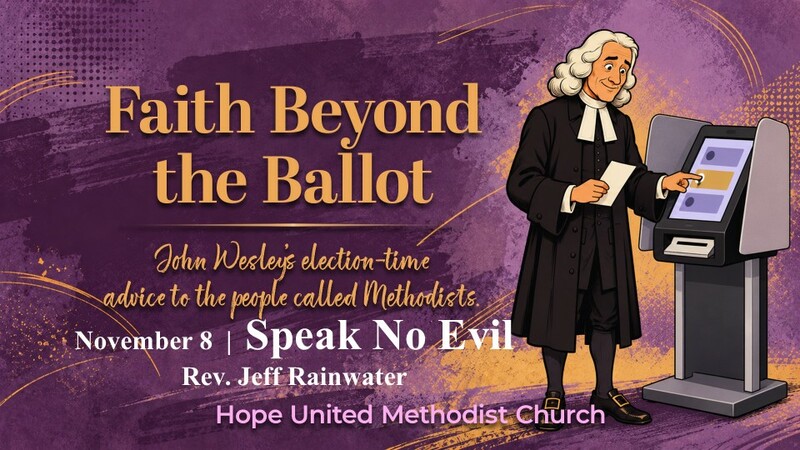
This week asks what disciplined Christian speech permits-and demands. In The Cure of Evil-Speaking, Wesley argues that a damaging report can be true and still be wrong to circulate needlessly; he also recognizes the need to speak in order to protect the innocent. That leaves ample room for testing claims, criticizing public decisions, exposing wrongdoing, and protesting injustice. Martin Luther King Jr.'s Letter from Birmingham Jail offers a case for study: he answered fellow clergy sharply, named the injustice they urged him to wait upon, and defended nonviolent direct action. His account of nonviolence and racial justice also asks resisters to guard against humiliating an opponent. Read alongside Isaiah and Acts, Titus's counsel about authorities must never become a reason to silence those seeking justice. The sermon's question is how to speak with enough truth and courage to confront harm while guarding against rumor, cruelty, and the desire for revenge.